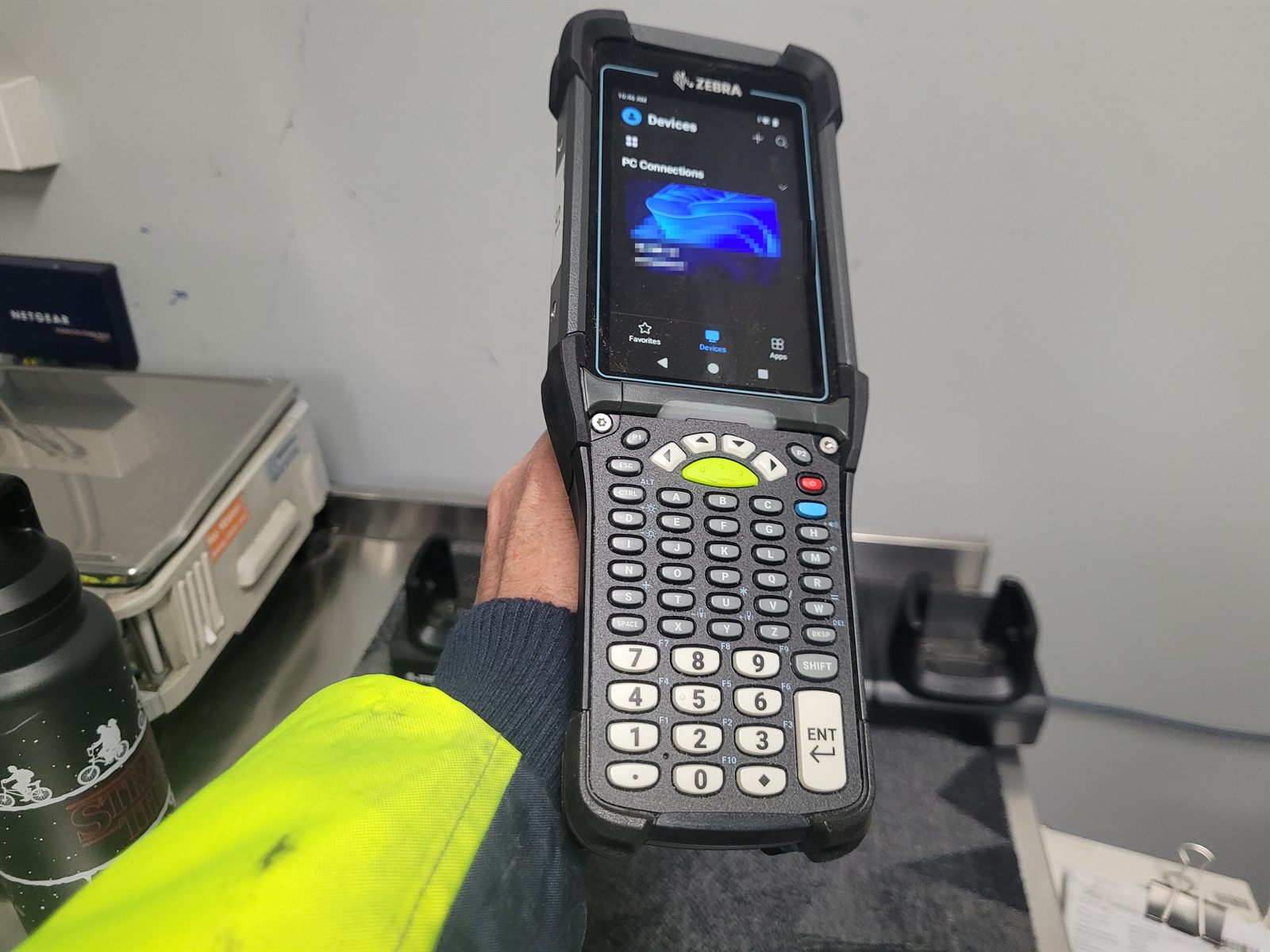
Three Zebra MC9400s
Two in the freezer configuration for the cold store, and one cellular model for the work that moves between buildings.
A first order is a decision made on a specification sheet and a conversation. It proves nothing yet.
Home/Android/Cold store scanning
A customer, named · Sydney · chiller and cold storeAustralian Wholesale Meats work stock through two rooms most handhelds are not built for — a chiller a few degrees above zero, and a cold store well below it. A device crosses between the cold and a loading dock several times a shift.
Every supplier will tell you their device handles a freezer. The only answer that means anything is whether somebody bought more of them after a year in one. This page is that, with their permission and their name on it.
The gap between them is the entire point. Anything can survive a demonstration.
Two in the freezer configuration for the cold store, and one cellular model for the work that moves between buildings.
A first order is a decision made on a specification sheet and a conversation. It proves nothing yet.
Nine months is long enough to find out whether a device survives the room it was bought for — a summer in a cold store, in and out of a dock, in real hands.
The second order is the only review that means anything. Everything else on a page like this is a supplier talking.
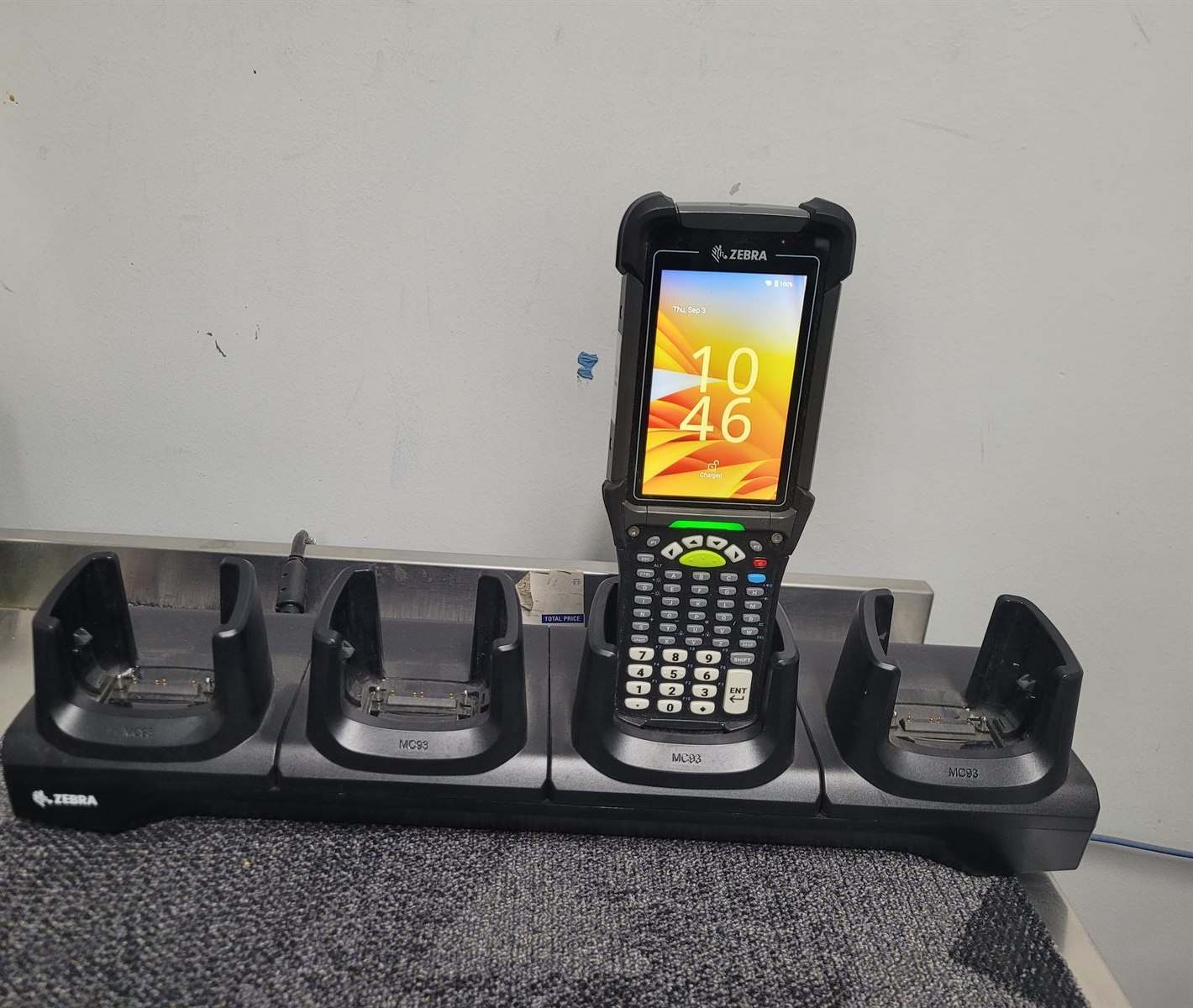
A device carried from a cold store to a dock fogs, then condenses, then fails — not straight away, but on a schedule that looks like bad luck until you have watched it happen three times to three devices.
The freezer build is made for that cycle: a heated window so the scanner can still read, and a heated touch panel so the screen still works with the moisture that condensing air leaves behind.
If any part of the run is below zero, that decision comes before the model number. Not after the price, not after the weight.
It is why the cheaper machine is not cheaper. A standard build in a cold store is a device you will replace, and the replacement costs more than the difference did.
Nobody replaced everything at once, and nobody was asked to.
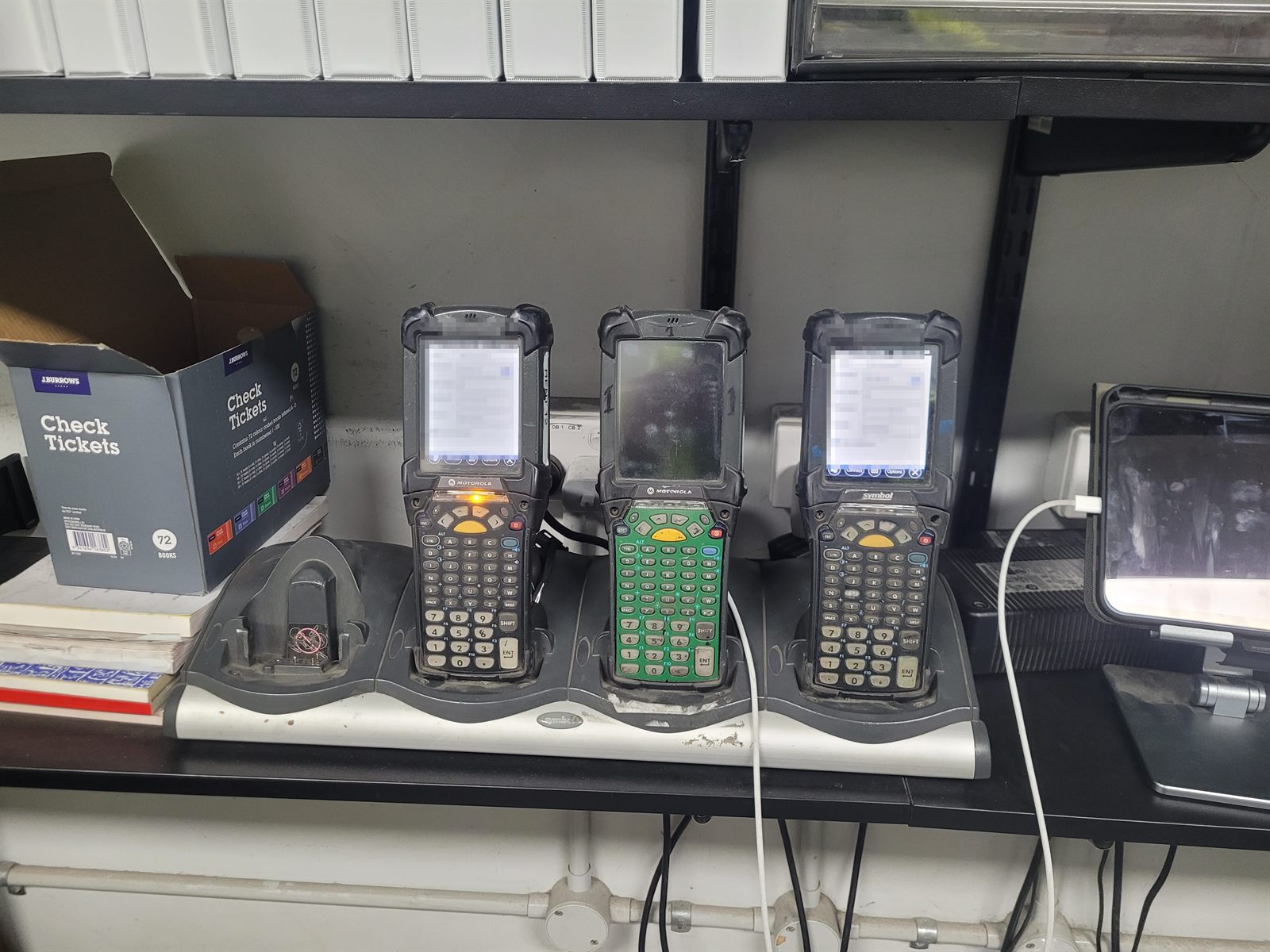
Mostly MC9100s, with an MC9090 and an MC9200 among them. Several are still in daily use, running a remote desktop session into the same host system the MC9400s talk to — old devices and new, on one screen, in one system. About half a dozen more sit retired: the ones that have already stopped.
That is what a real fleet looks like. They bought what the cold store needed, kept what still worked, retired what did not, and we supplied across all of it. It is a different conversation from being told your fleet is end-of-life and handed one quote for the lot — and the other kind of conversation only works once.
This part comes out of our own service records rather than the visit — twenty-one repair jobs across twelve machines since 2015.
A screen here, a backup battery there, a digitiser. One of them run over by a forklift. Ordinary wear on machines already several years old, and worth mending every time.
And the nature of them changed. Not single faults any more but whole machines — covers, keypads, triggers and screens together on the same job sheet.
The battery seized in the case, the clips gone, the shell worn through. Three units failing the same mechanical way in four weeks is not bad luck.
That is a fleet reaching the end together, and it is the point where mending costs more than replacing. The first MC9400s were ordered within months of it. Nobody sold them anything. The repair bench had already made the argument, and our job was to say which machine and which build.
There are no dollar figures on this page and there will not be. What a customer spends with us is their business. The arithmetic is theirs to know and the shape of it is the useful part — which is that a fleet tells you when, if somebody is keeping the job sheets and reading them.
Every bay carries a location label, colour-coded by level, with an aisle sign at the end of the run.
It is the least expensive thing in the building and the whole system rests on it. A warehouse that has not labelled its locations properly does not have a scanning problem — it has a labelling problem wearing a scanning problem's clothes. Labels and ribbons, matched to your printer.
Three of the screens in these photographs showed an internal IP address, a Windows domain and three usernames. Every one of them is pixelated. That is the customer's security to spend, not ours, and no case study is worth it.
Pixelated rather than blacked out, so the photograph still makes sense — a solid rectangle reads as censorship and tells you there was something worth hiding. And nothing else was touched: the stock is on the shelves and the cartons are readable, because a warehouse with real stock in it is the entire reason these are worth more than stock photography.
We do not publish a customer's name, premises or equipment without their approval. Australian Wholesale Meats read this page before it existed — the words, the photographs, and the section above about their repairs — and approved it in writing.
The version written without their name is still on file. If they ever change their mind, that is the one that goes up, and nobody has to ask twice.
Then the build matters more than the badge, and it is worth ten minutes on the phone before anybody quotes you. Tell us what the rooms are and how a device gets between them, and we will tell you which machine and which configuration — including when the cheaper one is genuinely fine.
And if you already have a fleet, we will tell you what is worth keeping. Windows Mobile devices are a different conversation, and we will say so.
